_edited.png)
Non-Surgical Jawline Sculpting: Combining Neuromodulators and Structural Filler for Masculine and Feminine Definition
- cortesaesthetics
- 10 hours ago
- 5 min read
A well-defined jawline contributes significantly to facial balance, profile aesthetics, and overall facial harmony. While genetics influence jawline shape, age-related structural changes, muscle activity, and soft tissue volume loss can gradually reduce definition over time.
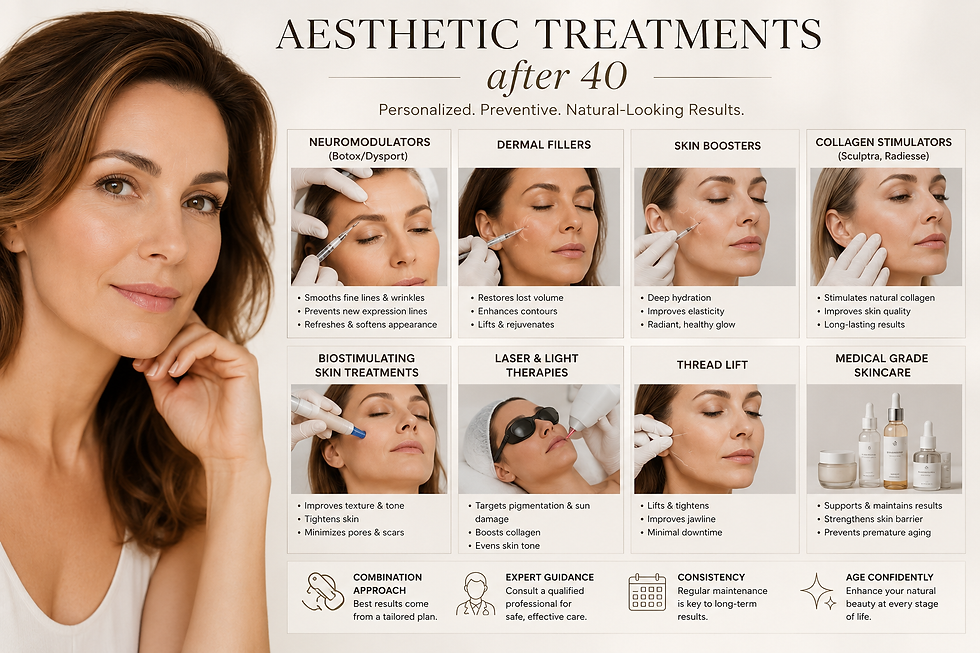
Advancements in aesthetic medicine now allow providers to improve jawline contours without surgery by combining neuromodulators and structural dermal fillers. Rather than treating a single concern, this approach evaluates facial anatomy as a complete system, allowing for personalized enhancement that respects each individual's natural features.
At Cortes Aesthetics in Salem, Oregon, treatment planning focuses on anatomy, proportion, and facial balance. Every jawline sculpting procedure is customized according to facial structure, aesthetic goals, and the unique characteristics that define masculine and feminine facial contours.
Understanding the Anatomy of the Jawline
The appearance of the jawline depends on several anatomical structures working together.
These include:
Mandibular bone projection
Chin position
Masseter muscle size
Superficial fat compartments
Deep structural support
Skin elasticity
Platysma muscle activity
Ligament integrity
Neck contour
Facial proportions
Changes affecting any one of these structures can alter jawline definition.
Effective treatment requires evaluating the entire lower face rather than focusing only on the visible jawline.
What Causes Jawline Definition to Change?
Jawline contour evolves throughout adulthood because of natural anatomical changes.
Common contributing factors include:
Gradual bone remodeling
Volume loss in facial fat compartments
Reduced collagen production
Skin laxity
Enlarged masseter muscles
Genetics
Weight fluctuations
Natural aging
Muscle imbalance
Decreased structural support
Understanding which factor is most responsible allows providers to select the most appropriate treatment strategy.
Structural Fillers and Jawline Enhancement
Structural dermal fillers restore support where natural volume has diminished.
Unlike superficial wrinkle correction, structural filler is placed strategically to reinforce facial architecture.
Potential treatment areas include:
Mandibular angle
Mandibular body
Chin projection
Pre-jowl region
Gonial angle
Lower facial support points
The goal is to strengthen facial contours rather than simply adding volume.
Proper placement creates cleaner transitions between the face and neck while preserving natural appearance.
The Role of Neuromodulators
Neuromodulators influence muscle activity by temporarily reducing excessive contraction in selected muscles.
For jawline sculpting, they may be used to improve facial balance when muscle activity contributes to contour concerns.
Treatment may involve:
Masseter muscle refinement
Platysma relaxation
Lower facial muscle balancing
Reduction of excessive muscle bulk
Improvement of lower face proportions
Neuromodulators complement structural filler rather than replacing it.
Together, these treatments address both muscular and structural contributors to jawline appearance.
Why Combination Treatment Often Produces Superior Results
Each product category addresses different aspects of facial anatomy.
Structural fillers primarily improve support.
Neuromodulators primarily influence muscle dynamics.
Combining both treatments may provide:
Better facial balance
Improved jawline definition
More refined profile contours
Enhanced chin-to-neck transition
Reduced lower facial heaviness
Harmonious facial proportions
Natural-looking enhancement
A comprehensive treatment plan frequently produces more balanced outcomes than using either treatment alone.
Masculine Jawline Characteristics
Masculine facial aesthetics typically emphasize strength and angularity.
Desired characteristics often include:
Broader mandibular angles
Strong chin projection
Defined posterior jawline
Sharper facial transitions
Greater lower facial width
Balanced facial symmetry
Treatment planning considers each patient's existing anatomy while preserving natural masculine proportions.
The objective is enhancement rather than exaggeration.
Feminine Jawline Characteristics
Feminine jawline enhancement generally prioritizes elegance and smooth transitions.
Desired characteristics may include:
Soft contour definition
Balanced lower facial proportions
Gentle mandibular angles
Harmonious chin projection
Refined facial silhouette
Natural profile balance
Treatment techniques differ significantly from those used for masculine facial sculpting because aesthetic goals are different.
Individual facial identity remains the priority.
Why Facial Balancing Is Essential
Jawline enhancement should never be performed in isolation.
The lower face must remain proportionate to surrounding structures.
Comprehensive assessment includes:
Midface volume
Chin projection
Lip proportions
Nose profile
Neck contour
Facial width
Vertical facial height
Smile dynamics
Skin quality
Treating these relationships rather than individual features creates more harmonious results.
Chin Projection and Jawline Definition
The chin serves as the anterior anchor of the jawline.
Insufficient projection may reduce jawline definition even when the jaw itself is structurally normal.
Assessment includes:
Chin width
Projection
Vertical height
Facial symmetry
Lower facial proportions
Occlusal relationship
Profile analysis
Small improvements in chin support often create significant improvement in overall jawline appearance.
Understanding the Masseter Muscle
The masseter is one of the strongest muscles involved in chewing.
In some individuals, enlargement contributes to a wider lower face.
Factors associated with masseter prominence include:
Genetics
Teeth grinding
Jaw clenching
Muscle hypertrophy
Chronic muscle overuse
Neuromodulator treatment may reduce excessive muscle activity, allowing gradual refinement of facial contours while maintaining normal chewing function.
Jawline Aging Beyond Wrinkles
Patients often associate aging with wrinkles alone, but structural changes frequently affect facial contours first.
These changes include:
Reduced bone support
Fat redistribution
Ligament laxity
Soft tissue descent
Skin thinning
Muscle imbalance
Addressing these deeper anatomical changes supports more comprehensive rejuvenation than wrinkle correction alone.
Individualized Treatment Planning
Every jawline requires a customized strategy.
Providers evaluate:
Facial anatomy
Bone structure
Existing volume
Muscle activity
Skin quality
Facial symmetry
Medical history
Previous injectable treatments
Long-term aesthetic goals
Treatment plans vary significantly between patients because facial aging patterns and aesthetic preferences differ.
Maintaining Natural Expression
One of the greatest advances in modern aesthetic medicine is the emphasis on preserving individuality.
Successful jawline sculpting should:
Maintain facial movement
Preserve natural proportions
Enhance existing anatomy
Avoid excessive projection
Improve profile balance
Respect facial identity
Support long-term harmony
The most successful results often appear subtle rather than dramatic.
Why Precision Matters
The jawline contains complex anatomy involving important blood vessels, nerves, muscles, and ligament attachments.
Safe treatment depends on:
Detailed anatomical knowledge
Advanced injection techniques
Appropriate product selection
Strategic placement
Conservative treatment planning
Continuous patient assessment
Precision helps maximize both safety and aesthetic outcomes.
Non-Surgical Jawline Sculpting in Salem, Oregon
Patients seeking non-surgical jawline sculpting in Salem, Oregon increasingly value customized treatment plans that combine multiple techniques instead of relying on a single product.
At Cortes Aesthetics, facial assessment extends beyond the jawline itself. Structural support, muscular activity, profile balance, and facial proportions are evaluated together to create treatment plans that reflect each patient's unique anatomy.
Whether the goal is stronger masculine definition or refined feminine contouring, individualized planning supports natural-looking enhancement while maintaining facial harmony.
Conclusion
Modern jawline sculpting has evolved from simple contour enhancement into a sophisticated form of facial balancing. By combining neuromodulators with structural dermal fillers, providers can address both muscular function and foundational support to create more refined, balanced results.
Every face has unique anatomical characteristics, which is why personalized assessment remains essential. Through careful evaluation and precise treatment planning, patients can achieve improved jawline definition that complements their natural facial structure rather than altering it.
If you are considering non-surgical jawline sculpting, schedule a professional consultation with Cortes Aesthetics in Salem, Oregon. A personalized facial assessment can determine the most appropriate treatment strategy to achieve balanced, natural-looking masculine or feminine definition based on your individual anatomy and aesthetic goals.
Instagram: https://www.instagram.com/cortes_aesthetics/


Comments